
Memory Games for Toddlers: 10 Easy Games to Play at Home
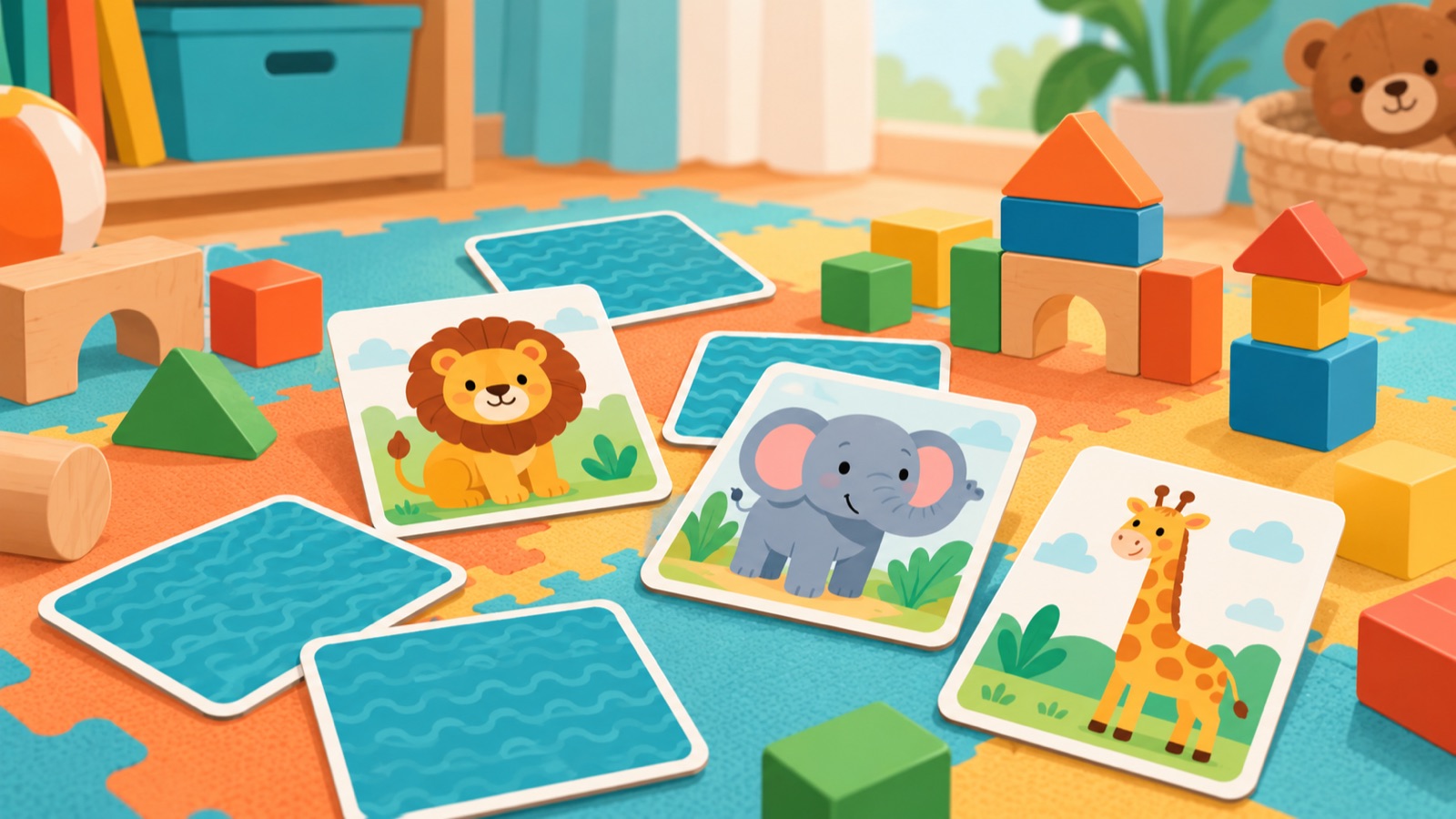
The best memory games for toddlers are the simplest ones: hiding a toy under a cup, matching a few picture cards, or asking “what is missing?” from a small tray of objects. You can play all of them with things already at home, in five minutes at a time, from around age one. This guide gives you 10 easy games, an age-by-age guide to how hard to make them, and tips for keeping your toddler happy instead of frustrated.
Short answer: start with fewer items than you think, play together, and stop while your child is still enjoying it.
Why Memory Games Work for Toddlers
Toddlers are busy learning that things exist even when they cannot see them, that pictures can match, and that a few steps come in an order. Memory games turn those ideas into play. Each round gives a child practice in paying attention, holding a thought for a few seconds and trying again, which are skills they use later in school.
You do not need special toys. What matters is that the game is short, that your child can win often, and that you are playing with them rather than testing them.
How Hard Should the Game Be? An Age Guide
Every child develops at their own pace, so treat this as a rough starting point and adjust to your child.
| Age | What to try | How many items |
|---|---|---|
| 12–18 months | Peekaboo, hiding a toy under a cloth | 1 |
| 18–24 months | Finding a toy under one of two cups | 2 cups |
| 2–3 years | Matching picture cards, “what is missing?” | 3–4 pairs, or 3 objects |
| 3–4 years | Memory match, copying a pattern, sound memory | 6–8 cards, or 4 objects |
| 4–5 years | Longer sequences, story recall, shopping list game | 10–12 cards, or 5 objects |
If your child loses interest, you have made it too hard or played too long. Go back one step.
10 Easy Memory Games to Play at Home
1. Hide the Toy
Show your toddler a small toy, cover it with a cloth or a steel katori, and ask “Where did it go?” Let them lift the cover and cheer when they find it. Once that is easy, hide it under one of two cups and swap the cups slowly.
2. Homemade Matching Cards
Draw or paste pairs of simple pictures on card: a ball, a cow, a banana, a car. Lay three pairs face down, turn two over, and see if they match. Add one new pair each week as your child gets confident.
3. What Is Missing?
Put three objects on a tray, such as a spoon, a sock and a toy car. Let your toddler look at them, then cover the tray, remove one, and ask “What is missing?” This is the classic game and it works from about age two.
4. Copy My Pattern
Clap, tap and stomp in a short pattern and ask your child to copy it. Start with two moves and build up. For older toddlers, do it with coloured blocks: red, blue, red.
5. Animal Sound Memory
Make an animal sound, such as “moo”, and ask your child which animal it was. Then make two sounds and ask for both in order. It works well in the car or while cooking.
6. Fetch Two Things
Ask your child to bring a spoon and a book. Once that is easy, try three things. It is real-life memory practice, and toddlers love being given a job.
7. Sock Matching
Dump clean socks in a pile and ask your toddler to find the pairs. It helps with attention, matching and sorting, and it gets the laundry done.
8. Tell the Story Back
After reading a short story, ask a few simple questions: “Who was in the story?”, “What did they eat?” Short bedtime stories with a clear beginning and end work best.
9. Shopping List Game
Before a trip to the market, say two or three items out loud and ask your child to remember them. Let them “check” the items off as you buy them.
10. A Flip-and-Match Game on a Phone
For travel days, waiting rooms and quiet time, a digital memory game can be a calm option. FlipZoo: Memory Matching Game is a card-matching game for ages 2 to 12, with 250+ levels that start easy and get harder, and 8+ themes such as Safari, Ocean, Space and Dino. It works fully offline, so it needs no Wi-Fi in a car or on a train. Sit with your toddler for the first few rounds and name the animals together.
6 Tips to Keep Memory Games Fun
- Keep it short. Three to five minutes is plenty for a toddler. Stop while they still want more.
- Let them win often. Start with fewer items than you think they can handle.
- Make it a game, not a test. Use a playful voice and celebrate tries, not only right answers.
- Add one thing at a time. One more card or one more object is enough to make it harder.
- Take turns. Let your toddler hide things for you to find. Children enjoy fooling a parent.
- Follow their interest. Use their favourite animals, vehicles or characters on the cards.
Mixing Offline Play and Screens
Offline play with real objects should be the main course, and a phone game is the occasional side dish. For guidance on how much screen time is sensible, read our guide to screen time guidelines for toddlers. If you are choosing apps, our parent’s guide to learning apps for ages 2–6 explains what to look for. For more hands-on matching ideas, see how to teach shapes to toddlers.
FAQ
At what age can toddlers start playing memory games? Simple games like peekaboo and hiding a toy under a cloth work from around 12 months. Matching games with picture cards usually suit children from about two years old.
How many cards should I start with for a toddler? Start with three pairs (six cards) for a two-year-old, and add a pair at a time as they get comfortable.
How long should a toddler memory game last? Three to five minutes is plenty. Short, happy sessions work better than one long one.
Are digital memory games good for toddlers? They can be a calm option now and then, especially when you play together and keep sessions short. Real-world games with objects and people should still make up most of your child’s play.
My toddler gets upset when they cannot find the match. What should I do? Make the game easier: use fewer cards, turn two cards face up and help them. Praise the effort and finish on a win.
Do memory games make children smarter? Games are a fun way to practise attention and remembering. They are one part of play, talk, stories and rest that help children learn. Enjoy them for the time you spend together.
Looking for a simple card-matching game for travel days? Try FlipZoo: Memory Matching Game — it plays offline, with levels that grow with your child. This article is general parenting guidance, not medical or developmental advice; talk to your paediatrician if you have concerns about your child’s development.